

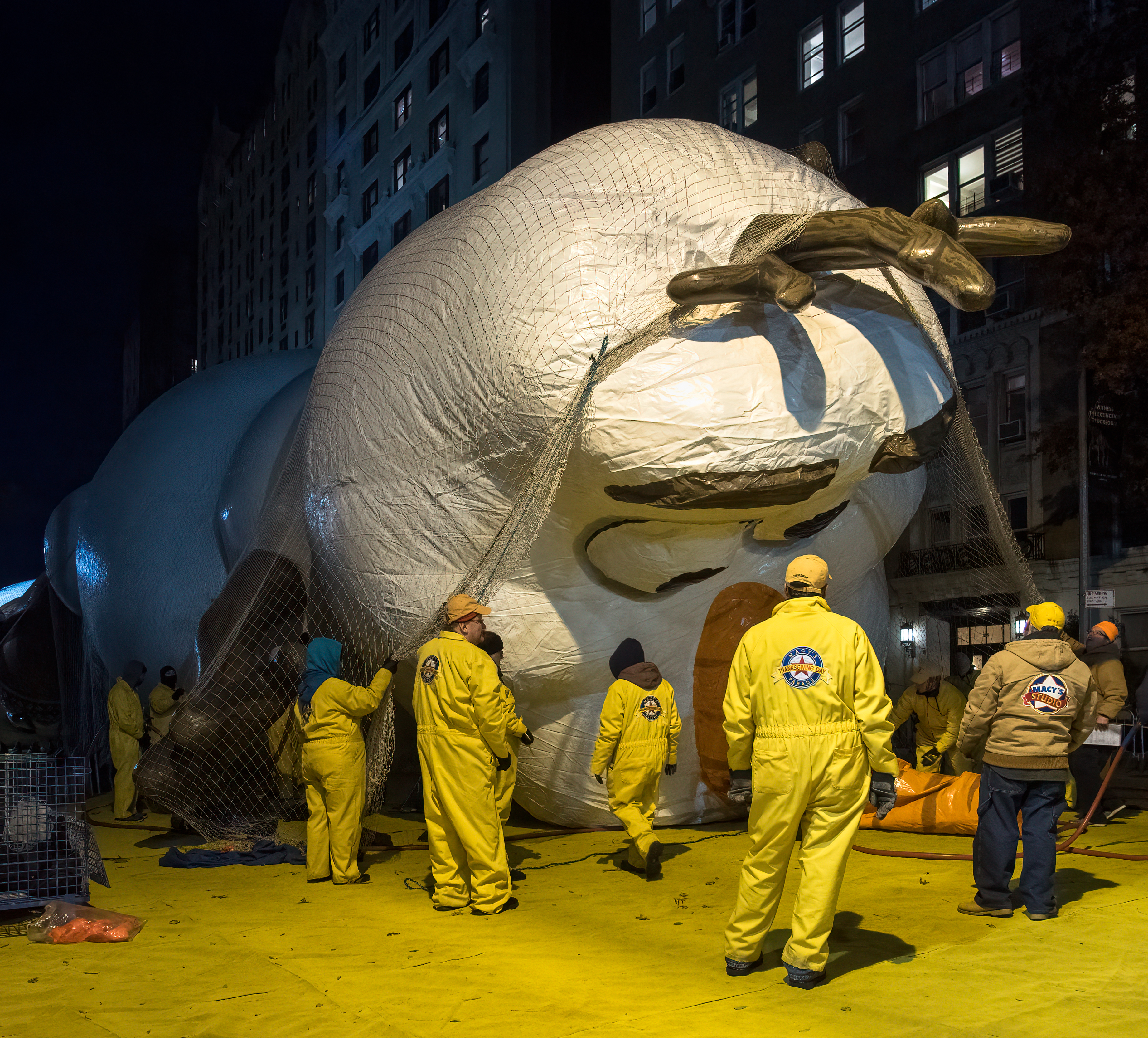
Besides food, family, and football, Thanksgiving Day traditions in the United States includes the spectacle of Macy’s Thanksgiving Day Parade in New York City. But not this year. At least, not on Thanksgiving Day.
Don’t be fooled by the parade currently airing on NBC on November 26th, 2026. That’s a rerun of New York City’s 2025 parade. The real 100th Macy’s Thanksgiving Day Parade will be held on Saturday, November 28th. Why? And who is paying the most for this postponement?
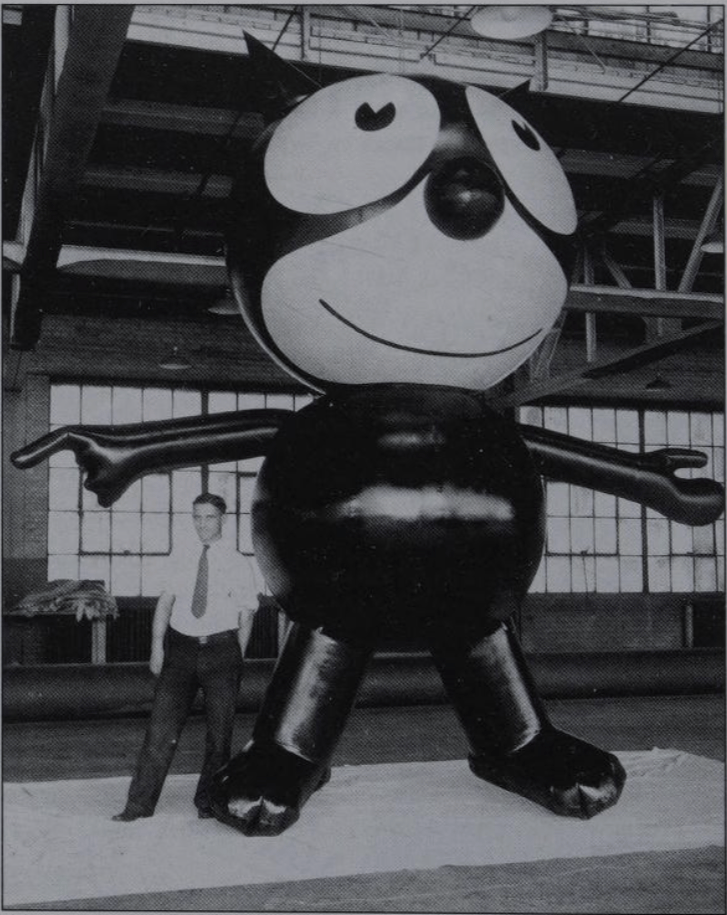
Not stated, courtesy of Bill Smith collection, Public domain, via Wikimedia Commons
With hearsay of disappointed tourists, students, and spectators, I was curious as to why Macy’s and NBC Universal chose to postpone this year’s 100th Macy’s Thanksgiving Day Parade to Saturday. So, I decided to enlist Google’s Gemini AI to help me follow the money. Turns out the answer was slightly more nuanced than I expected…
- I expected tourists, spectators, and students to be the biggest losers of the decision to postpone the parade. Since many of these individuals cannot afford the extra costs of a prolonged stay in New York City, this assumption appears to be largely correct. All of the time, effort, and resources these individuals collectively put into the effort to participate in or observe the parade must now be sufficient unto itself.
- I expected Macy’s and NBC Universal’s decision to ultimately be about money. Since NYC’s regulations prohibit flying inflatables at wind gusts exceeding 34 mph, the decision is also about safety. Macy’s and NBC Universal could have held the 2026 parade without inflatables. But the 100th parade includes a large increase in the total number of balloons, and any significant decrease in viewership could decrease future ad revenue for future years. So, the decision to postpone Macy’s 2026 Thanksgiving Day Parade may better preserve the brand and future advert sales by pleasing paying advertisers and sponsors.
- I did not expect the decision to be about viewers. In fact, I wasn’t even thinking about viewers. My empathy was exhausted on the disappointed students/performers who fundraised/prepared to attend/participate in the parade and the eager spectators and tourists who allocated their limited time and resources to watch them. But what about the viewers? The 2025 Macy’s Thanksgiving Day Parade included 3.5+ million in-person attendees, but the television viewership included approximately ten times (10x) that amount (NBCUniversal, 2025; Macy’s, n.d.).
We live in an interconnected world dominated by distant effects. So a parade can be postponed for the sake of the 90% of distant spectators and sponsors that fund the event rather than the actual 10% of workers and witnesses that run the event. This 2026 Macy’s Thanksgiving Day postponement paradox may be a practical example of the philosophy of utilitarianism. Macy’s and NBC Universal’s 2026 decision to not hold a parade on Thanksgiving Day may help keep the annual event alive and well for the maximum number of people over the longest period of time.
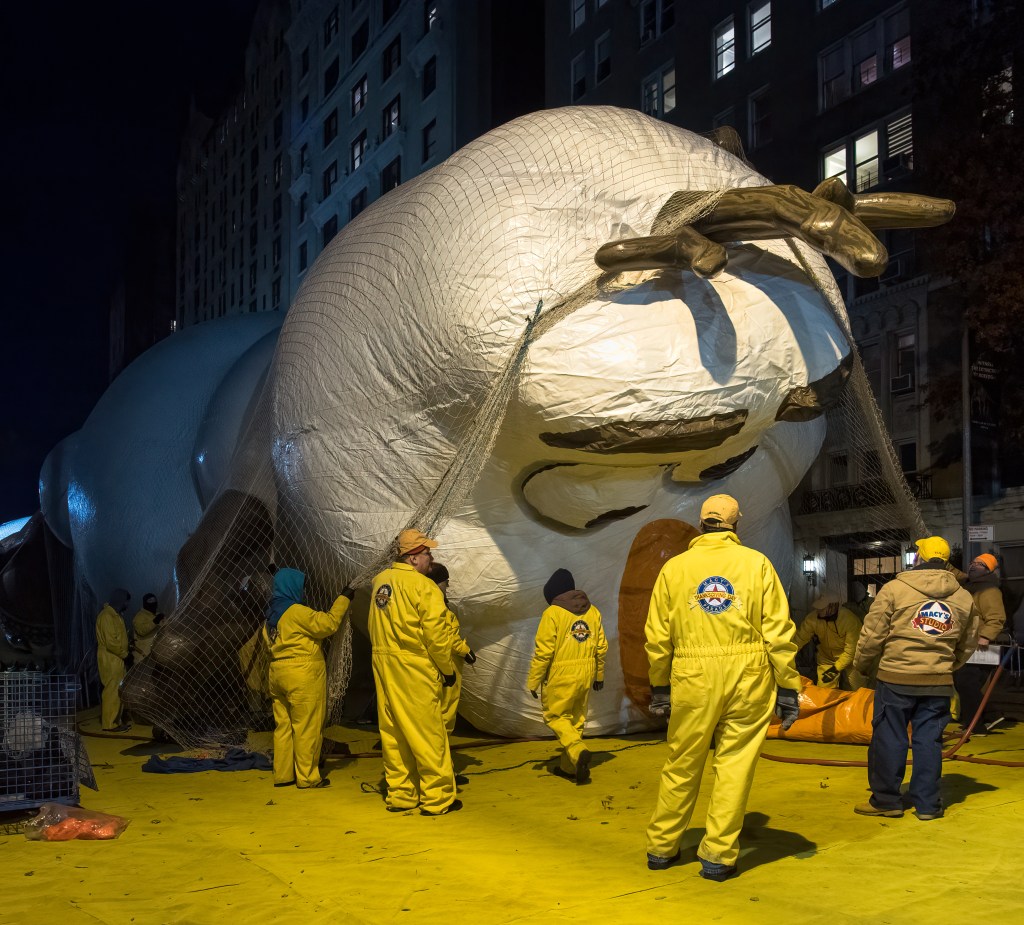
What was the alternative? A gritty, rainy-day parade without giant balloons? Even larger losses of current and future ad revenue? Less consumer demand for the overstock of holiday items on store shelves and in warehouses? Why prioritize the happiness of the five to ten percent (5% – 10%) of people (or less) who were frustrated or disappointed by the lost opportunity to attend the Thanksgiving Day parade when you can show a rerun on Thanksgiving Day and conduct the actual event on Saturday morning, thereby preserving the happiness of ninety to ninety-five percent (90% – 95%) of people (or more) who represent the vast majority of your paying customers? This appears to be yet another sacrifice of the interests of a small minority for the sake of a vast majority.
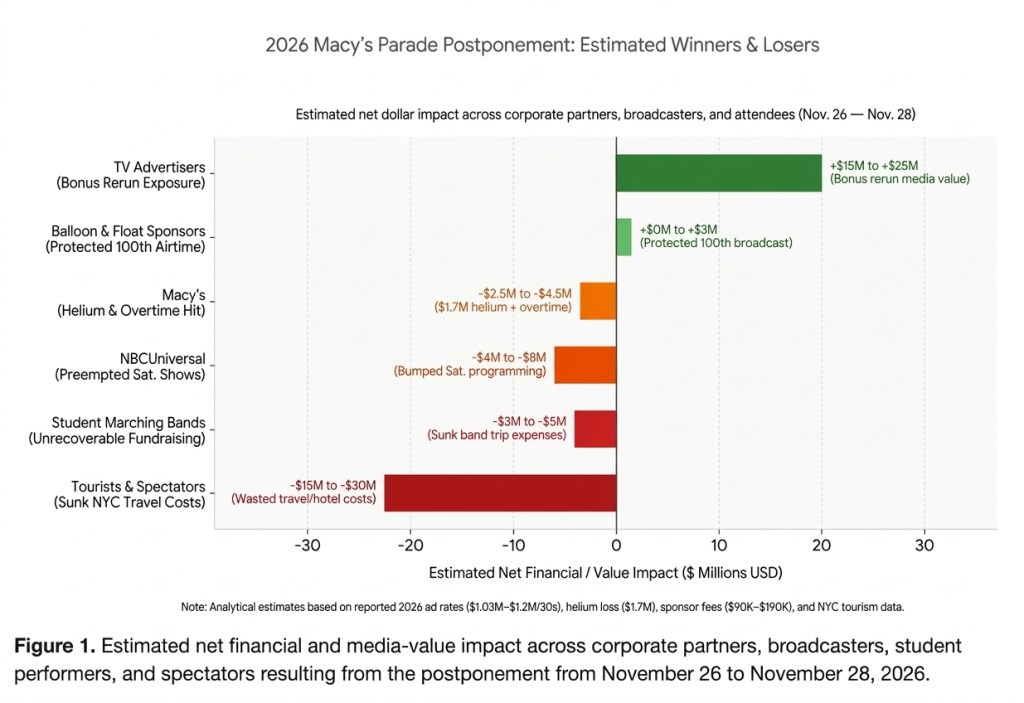
The underlying figures in the chart and analysis come from 2026 media reports, broadcast industry estimates, and New York City tourism benchmarks, combined with analytical estimates for the Saturday postponement:
1. Reported Baseline Figures (News & Industry Data)
Bullet TV Commercial Rates & NBC “Make-Good” Policy: Guideline estimates that 30-second commercial spots for the 2026 parade cost $1.03 million to $1.2 million each, with NBCUniversal selling out its commercial inventory early. An NBC spokesperson confirmed that advertisers are receiving a free bonus airing during Thursday’s 2025 rerun in addition to Saturday’s live centennial broadcast.
Bullet Macy’s Helium Loss: Due to a global helium shortage following strikes on Qatar’s Ras Laffan complex in March 2026, Macy’s faces a reported $1.7 million to nearly $2 million loss just from having to deflate and re-inflate the balloons after inflating them on Wednesday.
Bullet Parade Production & Sponsorship Fees: Macy’s spends roughly $13 million to produce the parade. Corporate balloon sponsors pay approximately $190,000 for a new balloon and $90,000 for a returning one, while float sponsors pay $200,000 to $250,000 in entry and performer fees.
Bullet Tourism & Spectator Spending: The parade typically attracts roughly 3.5 million in-person spectators and generates around $200 million in NYC tourism revenue. Premium private viewing packages and holiday hotel bundles for the 2026 parade ranged from $219 to $4,199 per person.
Bullet Weather & Postponement Logistics: NYC officials and Macy’s rescheduled the 100th parade from Thursday, November 26, to Saturday, November 28, at 8:30 a.m. ET due to forecasted wind gusts of up to 60 mph.
2. How the Net Chart Estimates Were Calculated
Because private corporate ledgers and individual family travel receipts are not publicly disclosed, the dollar ranges in the chart represent analytical estimates modeled from the verified baseline figures above:
Bullet TV Advertisers (+$15M to +$25M): Calculated at 30%–50% of the ~$50M+ total parade ad pool, reflecting the estimated media value of receiving a free Thanksgiving morning rerun slot alongside Saturday’s live broadcast.
Bullet Balloon & Float Sponsors (+$0M to +$3M): Reflects the preservation of ~$3M–$5M in total balloon and float sponsorship fees that would have received zero balloon airtime on Thursday, offset slightly by missing the immediate Black Friday morning retail window.
Bullet Macy’s (-$2.5M to -$4.5M): Combines the reported ~$1.7M–$2.0M helium loss with an estimated $1M–$2.5M in extra NYPD, security, and production crew overtime for Saturday.
Bullet NBCUniversal (-$4M to -$8M): Estimates lost ad revenue from preempting three hours of regular Saturday morning programming and sports pregame windows, plus secondary live-production crew costs.
Bullet Student Marching Bands (-$3M to -$5M): Based on the parade’s ~11 marching bands (~2,500–3,500 total students) at an industry average of $1,200–$1,800 per student in fundraised travel, hotel, and bus expenses, assuming roughly half to two-thirds cannot extend their stay through Saturday.
Bullet Tourists & Spectators (-$15M to -$30M): Modeled as 7.5%–15% of the parade’s $200 million NYC tourism economic impact, accounting for non-refundable holiday hotel nights, flight change fees, and prepaid viewing packages absorbed by out-of-town visitors unable to stay until Saturday.
Bullet Ad Pricing & NBC “Make-Good” Policy (DesignRush / Variety / Guideline, Nov. 26, 2026)
Bullet Claim in PDF: 30-second commercial spots cost $1.03 million to $1.2 million, inventory sold out early, and NBC gave advertisers a free bonus airing during Thursday’s 2025 rerun alongside Saturday’s live broadcast.
Bullet Fact-Check: Verified. Variety and Guideline data confirm 30-second spots cost $1.03 million to $1.2 million in 2026 (up 15%–20% over 2025), and an NBC spokesperson confirmed advertisers receive free spots in both Thursday’s encore and Saturday’s live broadcast.
Bullet Helium Loss & Global Supply Shortage (The Big Lead / New York Post, Nov. 26, 2026)
Bullet Claim in PDF: Macy’s faces a ~$1.7 million to nearly $2 million loss from deflating and re-inflating balloons due to a 2026 helium shortage triggered by strikes on Qatar’s Ras Laffan complex.
Bullet Fact-Check: Verified. Reporting cites a nearly $2 million ($1.7M–$2M) helium loss after global helium prices spiked in March 2026 following strikes on Qatar’s Ras Laffan facility.
Bullet Weather Delay & NYC Wind Regulations (Forbes / EnergyNewsBeat, Nov. 26, 2026)
Bullet Claim in PDF: NYC regulations prohibit balloons from flying when sustained winds exceed 23 mph or gusts exceed 34 mph; Thursday’s storm brought gusts up to 60 mph, forcing the first weather postponement in the parade’s history to Saturday, Nov. 28 at 8:30 a.m. ET.
Bullet Fact-Check: Verified. High wind warnings forecast gusts of 60 to 65 mph, triggering NYC’s 23 mph sustained / 34 mph gust ban and moving the 100th parade to Saturday, Nov. 28 at 8:30 a.m. ET.
Bullet Parade Production, Balloon Fees & NYC Tourism Benchmarks (TheStreet / Business Insider, Nov. 24–26, 2026)
Bullet Claim in PDF: Production costs ~$13 million; balloon sponsorships cost $190,000 for new balloons and $90,000 for returning ones; the parade draws ~3.5 million spectators and ~$200 million in NYC tourism spending.
Bullet Fact-Check: Verified (with nuance). These baseline industry figures are accurate for a standard parade year. However, because 2026 is the 100th parade, featuring 100 inflatables (up from the usual 17–30), total 2026 production and sponsorship pools are likely higher than the historical $13 million baseline.
Bullet Marching Band & Tourist Losses (CBS New York / Nacionale, Nov. 25–26, 2026)
Bullet Claim in PDF: Marching bands spend $1,200–$1,800 per student in fundraised travel costs, and bands forced to leave Friday lose 100% of their investment.
Bullet Fact-Check: Partially Understated. Today’s reporting confirms our estimate of $3M to $5M in total marching band losses was actually conservative. Individual band trips cost far more than $1,200–$1,800 per student—for example, Dobyns-Bennett High School’s trip cost ~$750,000, Pearland’s band is raising $350,000 just to extend its stay, and Hawaii’s band faces over $700,000 in bills, with Macy’s providing only a $10,000 initial grant per band and offering no commitment to cover Saturday extension costs.
Sources (APA):
DesignRush. (2026, November 26). NBC gives Macy’s parade advertisers a bonus run on $1M TV spots. https://news.designrush.com/macys-thanksgiving-parade-delay-nbc-advertiser-makegood
Kain, E. (2026, November 26). Macy’s Thanksgiving Day Parade 2026: Why it’s been postponed and when and where to watch. Forbes. https://www.forbes.com/sites/erikkain/2026/11/26/macys-thanksgiving-day-parade-2026-postponed-new-date-time-how-to-watch/
Macy’s. (n.d.). The 100th Macy’s Thanksgiving Day Parade – Press & marketing. https://www.macys.com/s/parade/press/
Nacionale News. (2026, November 26). Who pays for the bands to stay for the Macy’s parade Saturday? So far, the bands and their donors. https://www.nacionale.com/en/articles/who-pays-bands-stay-macys-parade-saturday-extra-costs-donations-pearland-hawaii
NBCUniversal. (2025, December 1). NBC’s Macy’s Thanksgiving Day Parade set all-time viewership record. https://www.nbcuniversal.com/article/nbcs-macys-thanksgiving-day-parade-set-all-time-viewership-record
Ramos, A. (2026, November 26). Macy’s Thanksgiving Day Parade postponement leaves participants, tourists scrambling to change plans. CBS New York. https://www.cbsnews.com/newyork/news/macys-thanksgiving-day-parade-postponement-participants-tourists/
Rodini, L. (2026, November 24). Macy’s Thanksgiving Day Parade: How much it costs & who pays for it. TheStreet. https://www.thestreet.com/retail/macys-thanksgiving-day-parade
Sanchez, J. (2026, November 26). Macy’s Thanksgiving Day Parade postponement threatens massive $2M loss. The Big Lead. https://www.thebiglead.com/macys-thanksgiving-day-parade-postponement-massive-loss/
Vlamis, K., Li, K., & Goel, S. (2026, November 26). Macy’s Thanksgiving Day parade postponed for the first time in its history. Business Insider. https://africa.businessinsider.com/news/macys-thanksgiving-day-parade-postponed-for-the-first-time-in-its-history/qk9mqn9


