

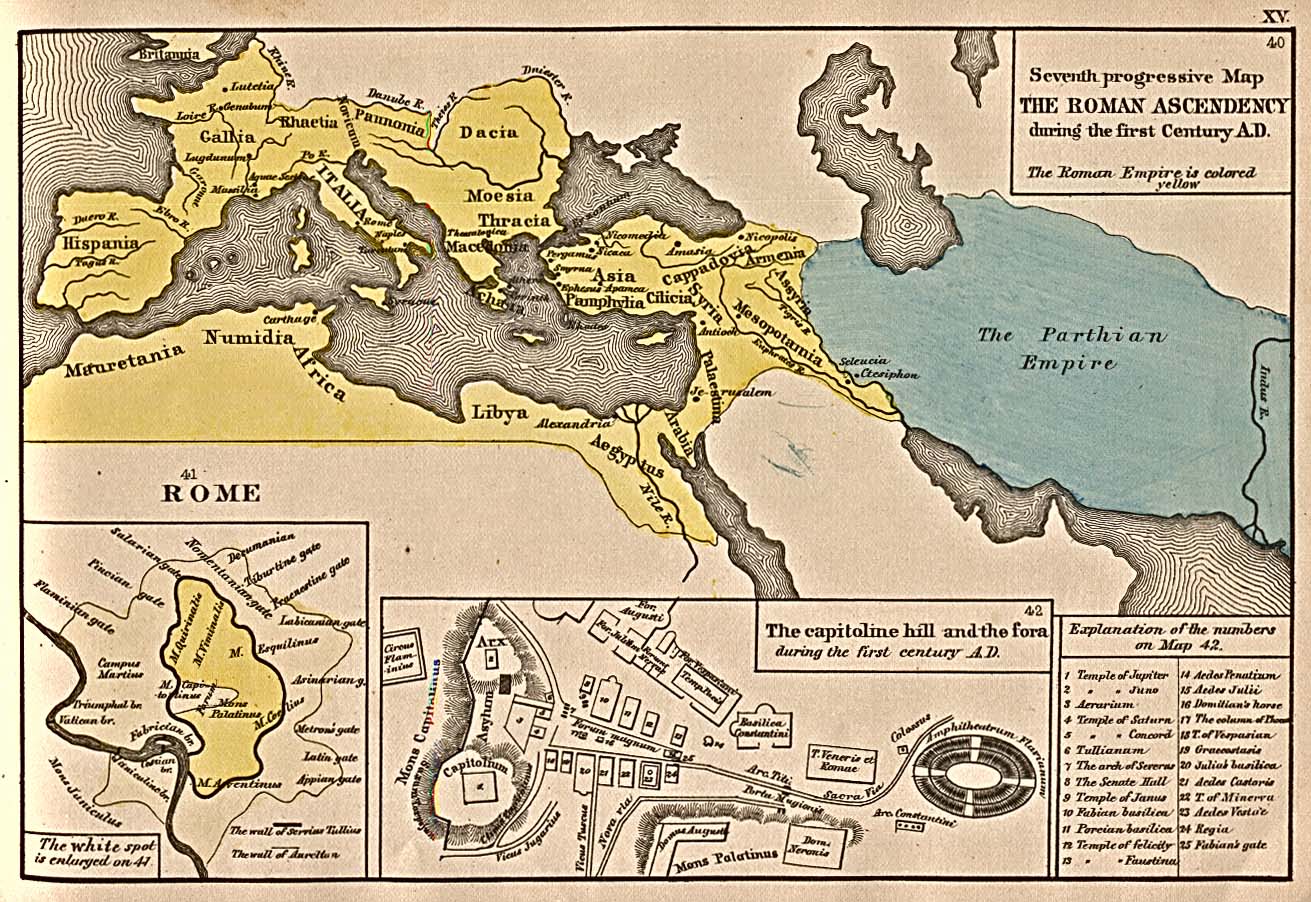
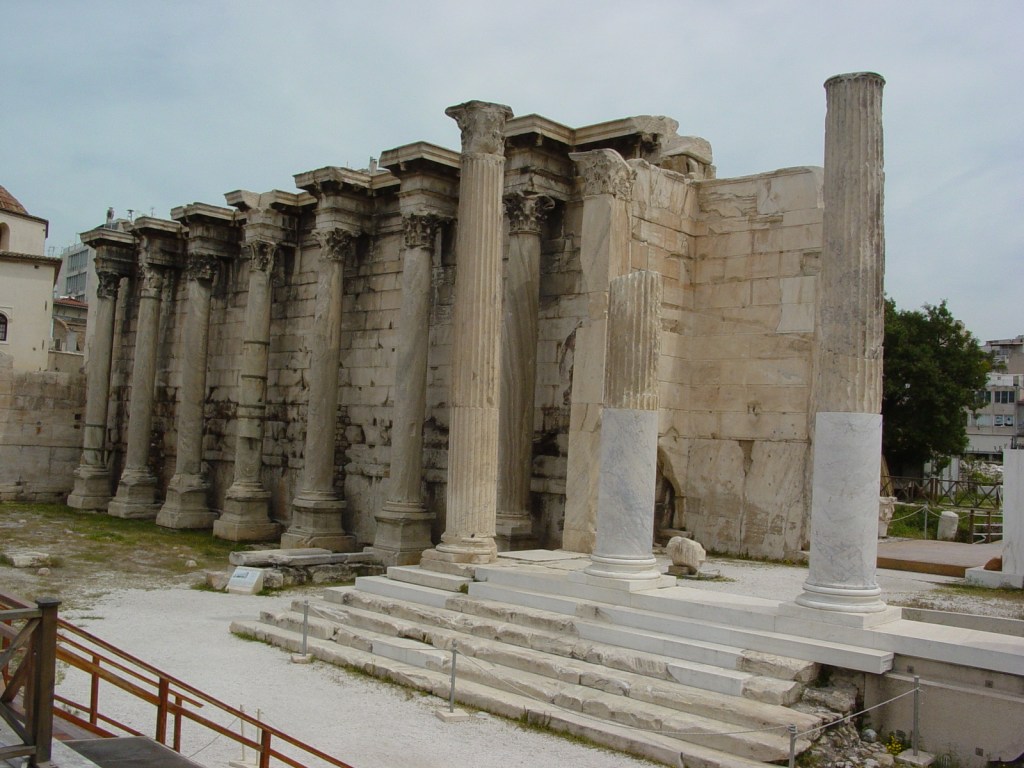
“Peace through strength” is a concept tied to Vegetius and the ancient Roman adage “Si vis pacem, para bellum” (“If you want peace, prepare for war”). The idea as a foreign policy may also be traced back to Emperor Hadrian’s second century rule over the Roman Empire (117-138 AD/CE). Speller (2003) writes of Emperor Hadrian, “His agenda was clear: peace through strength, or failing that, peace through threat.”

Carole Raddato (2022) reports that Hadrian was one of the “Five Good Emperors”. These Emperors were distinct for their non-hereditary lines of succession. Hadrian’s rule fell between the first two and the last two of these five Emperors. Unfortunately for Rome, Marcus Aurelius – the last and most popular of the five – did not carry on the legacy of his predecessors and failed to adopt a successor outside his family. His son Commodus inherited the throne, proved himself incompetent, and accelerated the decline of the Roman Empire.
Kelly Maguire (2023) reports the reigns of the “Five Good Emperors” (96 AD/CE – 180 AD/CE) falls within the era known as Pax Romana or “Roman Peace” (27 BC/CE – 180 AD/CE). Maguire (2023) notes although this era was internally peaceful (i.e. lacked civil conflicts), it was externally violent. Rome’s internal peace was driven by an aggressive expansion of the empire’s borders: “Peace through strength”.

Hadrian’s adage has been in the news more frequently as President Trump, Secretary Hegseth, and their supporters recite the words (and foreign policy concept) popularized by Bernard Baruch, Barry Goldwater, and President Reagan (O’Brien, 2025; Taegan, 2026). The second Trump Administration appears to be attempting to resurrect Pax Romana, extend Pax Americana, or ignite a new golden age… whatever you want to call it. But the era of [internal] “Roman Peace” (Pax Romana) “…through strength” (Imperialism) is notable for another, more ominous, reason.
The Fall of Rome’s Republic, Dawn of The Roman Empire, and Life of Christ
I discovered the irony of “peace through strength” while struggling through one of those books that takes forever to finish: Why Nations Fail (2012) by Daron Acemoglu and James Robinson. I was finding a paragraph about radiocarbon dating rather boring until I reached the last sentence: “Around the time of the birth of Christ, [the number of Roman shipwrecks] reached a peak of 180.” I found that fact fascinating. The quintessential figure of self-sacrifice and altruism (Jesus) entered the world during Rome’s most economically prosperous period. Rome’s economic prosperity was apparently built on corruption and extraction – opposite to the life of Christ.
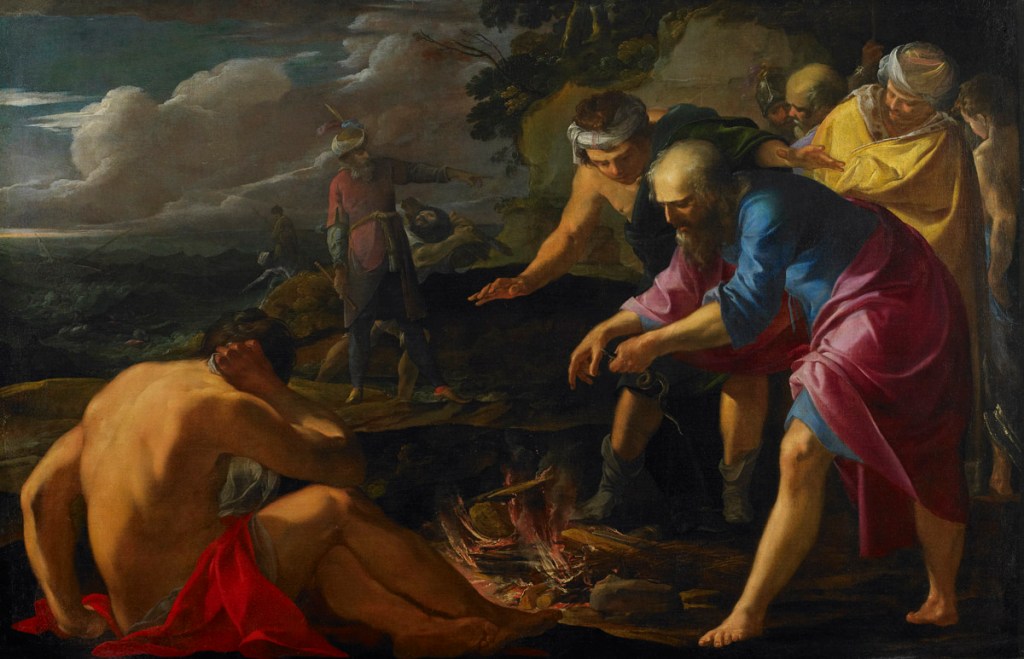
Saint Paul Shipwrecked on Malta (Laurent De La Hyre, 1630) Public domain, via Wikimedia Commons
The book explains these shipwrecks as a sign of Rome at the peak of its extractive economic power. Acemoglu and Robinson (2012) suggest that the people of the Roman Republic (510 BC – 49 BC) had more political representation than the people of the Roman Empire (49 BC – AD 476). “Pax Romana”, which was defined in-part by aggressive foreign policies reflecting “peace through strength”, falls within the period of the Roman Empire, not during the time of the Roman Republic.
Acemoglu and Robinson (2012) explain that even though the Roman Empire was powerful, its extractive economy and the institution that drove it (the Senate) was unsustainable. The Roman Republic’s checks and balances eroded as the Plebeian Assembly, plebeian tribune, and citizen-soldiers lost their resources and power. Income inequality grew. And the fate of Rome’s Republic was sealed when Julius Caesar crossed the Rubicon in 49 BC. The crossing culminated in his formal dictatorship and sudden death at the hands of the Senate in 44 BC.
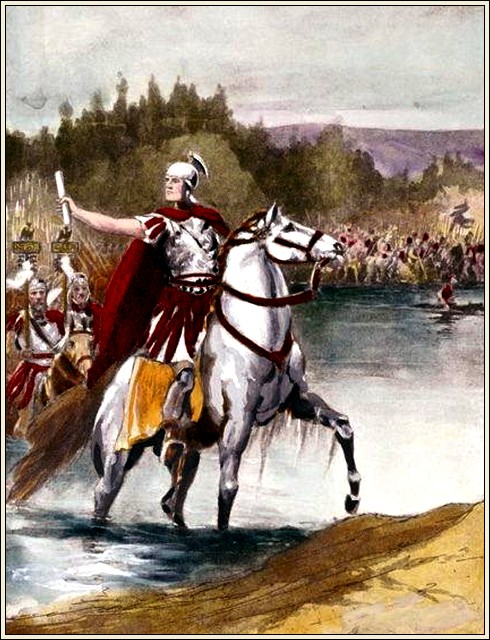
Jacob Abbott (1849), Public domain, via Wikimedia Commons
Civil War ensued. The men who had conspired to kill him fought each other for power. Eventually, Octavian won and continued Julius Caesar’s authoritarian theme.
Acemoglu and Robinson (2012) explain: “…Octavian, known after 28 BC as Augustus Caesar, ruled Rome alone… Even if the Roman Republic created a tilted playing field in favor of the senatorial class and other wealthy Romans, it was not an absolutist regime and had never before concentrated so much power in one position.”
The period of internal peace and violent imperialism (Pax Romana) began. Domestic peace lasted for a few centuries before violent internal conflict and instability resumed. It seems everything changed when Julius crossed the Rubicon, but did it?
“It is only the last link in a very long chain of turning points commissioned to produce the weighty result; it is not any more important than the humblest of its ten thousand predecessors.” – Twain, 1910, p. 118
Did everything really change with Caesar’s crossing of the Rubicon, or is that just the most dramatic turning point of the story? Julius (or Octavian) may have been able to slow Rome’s decline if they had acted differently, but many of Rome’s extractive trends were well underway. Rome even had “Five Good Emperors” – in a row! None of them turned the Empire back into a Republic. What happened?
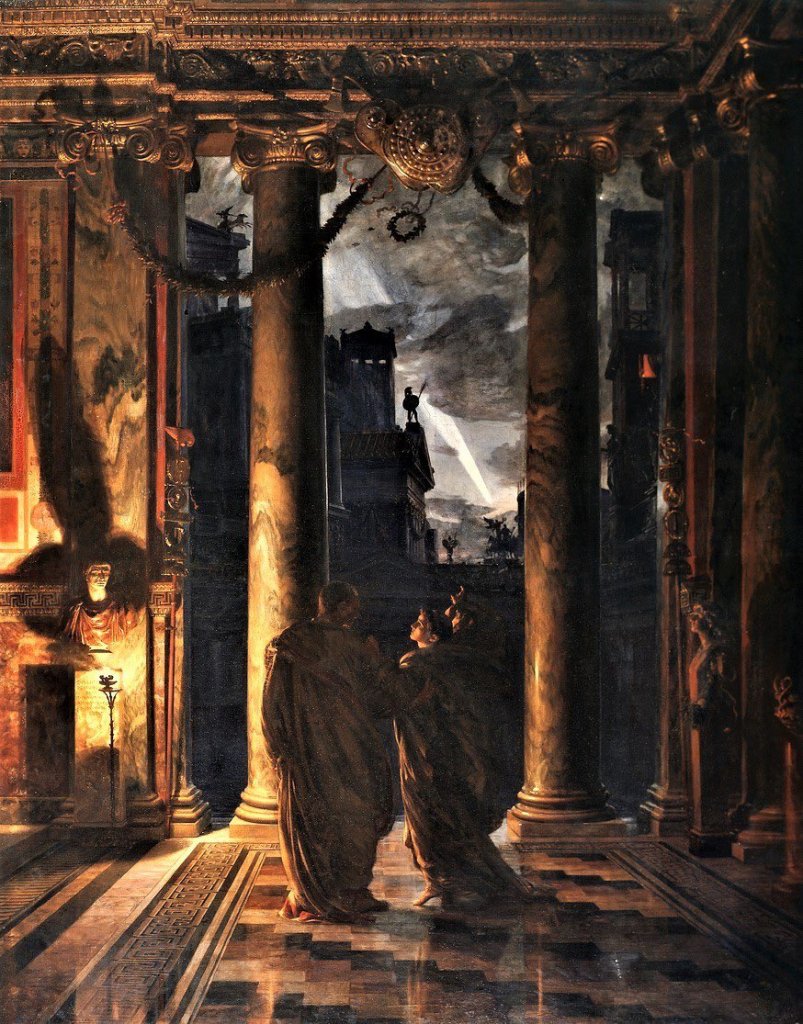
The Ides of March by Edward John Poynter (1883), Public domain, via Wikimedia Commons
Again, Acemoglu & Robinson (2012): “The Roman Empire [reached] its greatest extent in 117 AD… It was this transition from republic to principate, and later naked empire, that laid the seeds of the decline of Rome. The partially inclusive political institutions, which had formed the basis for the economic success, were gradually undermined.”
This timeline places most of the events of the gospels (approx. 6–4 BC to 30–33 AD) during the reigns of Augustus (Octavian) and Tiberius (14 – 37 AD/CE). The life of Jesus was sandwiched between the end Rome’s Republic – defined by fragile political representation – and the beginning of its Empire which would be defined by dictatorships. The “Five Good Emperors” were essentially an incredibly lucky sequence of dictators.
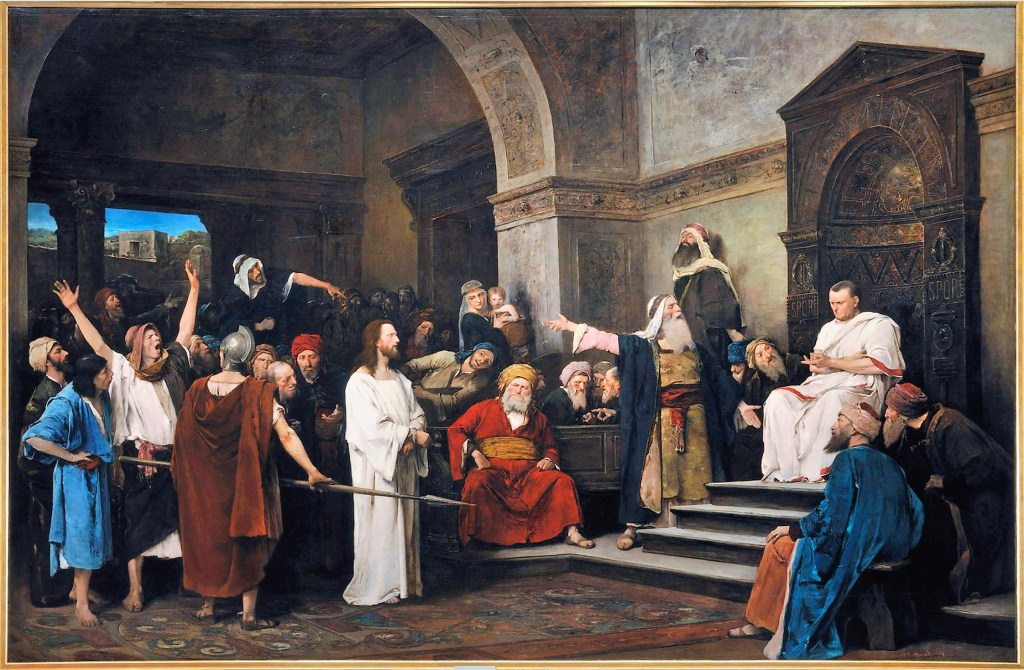
It’s fascinating to learn about the extractive economics of the powerful empire in which Jesus lived. He was a nobody in a backwater part of an extractive and violent empire. Yet his life dramatically contrasted the hypocrisy and corruption of the time and place in which he lived.
When in Rome…
Reading Acemoglu and Robinson (2012) while observing the second Trump Administration’s push to resurrect the Monroe Doctrine of an aggressive, transactional Pax Americana is concerning. History shows that the imperial pursuit of a ‘Golden Age’ through unchecked centralization may hasten the decay of pluralistic institutions and serve as a precursor to tyranny.
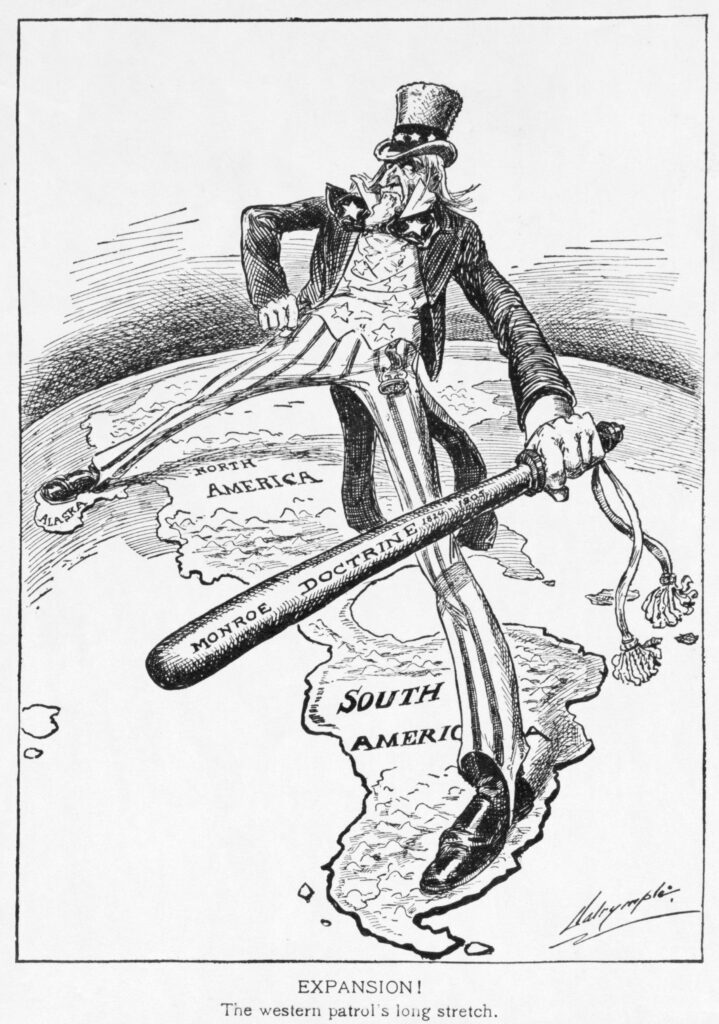
President Trump’s resurgence has been tumultuous, marked by an unprecedented consolidation of influence over the Legislature and the Judiciary. The Roman precedent suggests a quiet erosion of political representation may occur through the slow accumulation of power by those who trade cheap promises for costly rights. The fates of America’s centralized and inclusive political institutions are to be determined. But the trends are concerning.
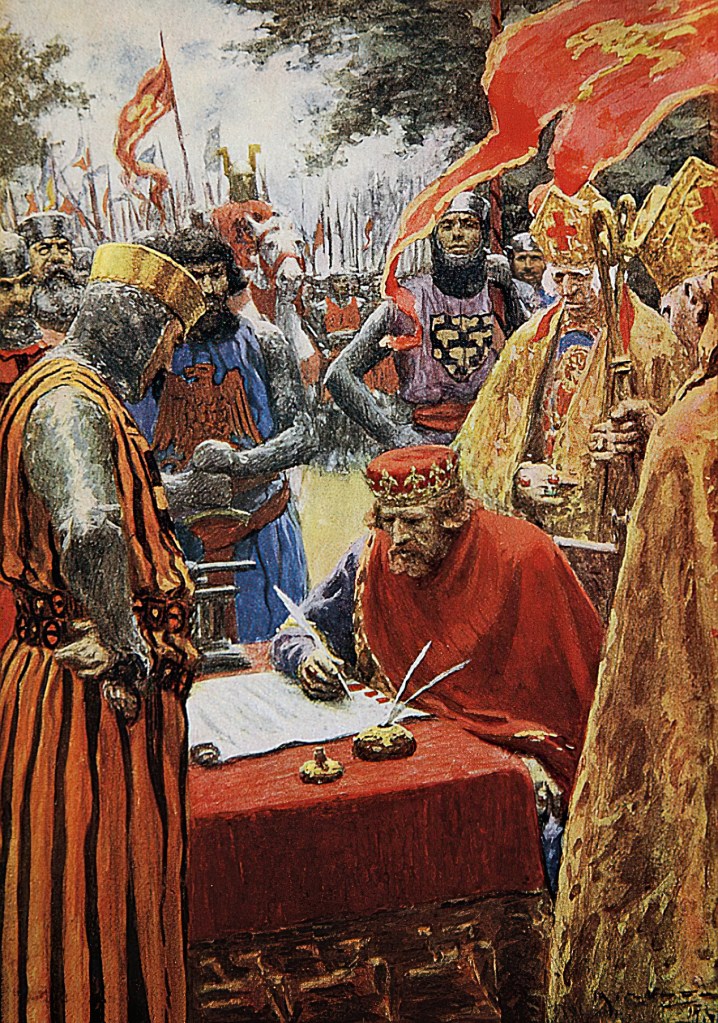
Acemoglu and Robinson (2012) mention petitions, broad coalitions, and utilization of hard-won political rights are essential for establishing and preserving inclusive economics (i.e. access to property rights, patents, credit, etc.). If we wish to avoid the extractive path of an imperial state, our engagement cannot be passive. In other words…
(1) If you only want freedom if it comes with responsibility… read, write, and educate yourself.
(2) If you only want taxation if it comes with representation… vote, petition, and build coalitions.
(3) If you only want authority if it comes with accountability… create, innovate, and start a business.
And, by all means, feel free to be skeptical of a lasting internal peace within an increasingly imperial state.
Sources:
Acemoglu, D., & Robinson, J. A. (2012). Why nations fail: The origins of power, prosperity, and poverty. Crown Publishers.
Laurent de La Hyre (1630). Saint Paul Shipwrecked on Malta. Wikimedia Commons. https://commons.wikimedia.org/wiki/File:Laurent_de_La_Hyre%27s_Saint_Paul_Shipwrecked_on_Malta.jpg
Maguire, K. & World History Encyclopedia. (2023, May 5). Pax Romana or the Roman Peace explained [Video]. YouTube. https://www.youtube.com/watch?v=IyruglATn8o
O’Brien, R. C. (2025, October 16). The return of peace through strength: making the case for Trump’s foreign policy. Foreign Affairs. https://www.foreignaffairs.com/united-states/return-peace-strength-trump-obrien
Raddato, C. & Following Hadrian. (2022, September 12). Following in the Footsteps of Hadrian: An Evening with Carole Raddato [Video]. YouTube. https://www.youtube.com/watch?v=Smtg2qGgxgs
Speller, E. (2003). Following Hadrian: A second-century journey through the Roman Empire. Oxford University Press. [1, 2]
Taegan. (2026). Peace through Strength – Political Dictionary. In Political Dictionary. https://politicaldictionary.com/words/peace-through-strength/
Twain, M. (1910, February). The turning point of my life. Harper’s Bazar, 44(2), 118–119.


