

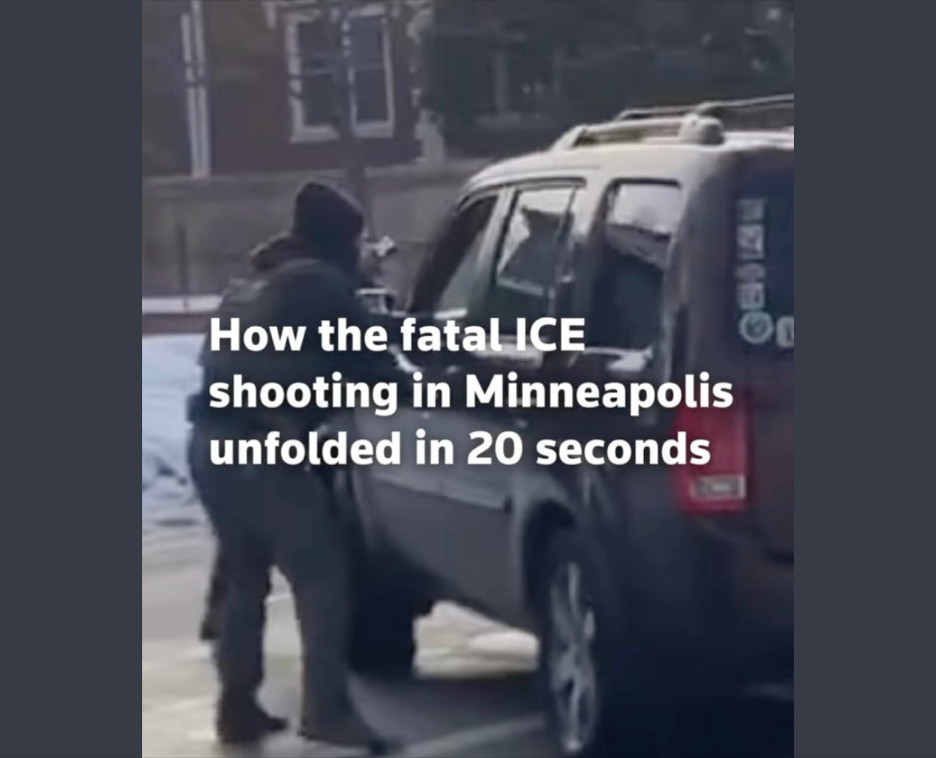
My experience with law enforcement has been fearful but positive. Hands on the wheel, window down, car in park, engine off, and guilty/scared feeling because usually I was speeding or disappointed/confused because I don’t know why I was pulled over. I try to be inquisitive/curious, honest/compliant, and respectful in my conversation with the officer (Yes Sir/Ma’am, No Sir/Ma’am).
However, I feel my treatment has been merciful. I have been let off with warnings multiple times and received only one speeding ticket when I could have received multiple tickets during my 18 years of driving. My understanding is that people are often stereotyped and treated very differently based on their demographics and appearance. I have been lucky, fortunate, or spoiled in my experience with law enforcement.
But I still fear the fact that they are armed and I am not. And I feel the best way to avoid that potential asymmetry of lethal force is to (1) avoid illegal behavior and even the appearance of breaking the law, (2) treat officers with compliance and respect, seeking to deescalate the situation if it is tense, and (3) avoid all unnecessary interactions with armed individuals. Rule three is the most disturbing reality for me.
I did not used to think (3) Avoid of All Unnecessary Interactions With ANY Armed Individuals was so important when I was a teenager learning to drive in the MidWestern United States. But over time I’ve discovered that an unarmed law enforcement or uniformed officer is much less intimidating and often much less dangerous than an armed officer, and that my number one priority to maintain the safety of myself and those around me is to avoid all unnecessary interactions with armed individuals (uniformed officers included).
Real life is not like the Andy Griffith Show. I have lived long enough to see (both in-person and online) some very disturbing behavior from law enforcement officers. Unfortunately, violence can often beget more violence, and many officers and soldiers have seen their fair share of violence. They are human, and humans often act on emotion/impulse.
Daniel Kahnemann calls this “System 1” (thinking fast) vs “System 2” (thinking slow). Fast thinking and split-second decision making with lethal weapons is dangerous no matter how much training you have. I’ve seen and am very thankful for extremely competent and extra-careful/professional gun owners and law enforcement officers who not only adhere to gun safety and deescalation training but also endeavor to protect others and keep everyone (including themselves) out of harm’s way. It’s clear to me that those individuals regularly rehearse and re-rehearse gun safety training and de-escalation techniques in order to better manage the inherent dangers of lethal weapons.
Renee Good’s tragic death demonstrates systemic societal failures of both uniformed and civilian training, preparedness, and response. I am hoping for a just verdict in this case and more insightful context to be revealed before a jury in a court of law. What is clear to me is that many quick (fast-thinking) decisions were foolishly made in this incident, and it should be used as a training video for (1) how not to approach and endeavor to stop a vehicle and (2) how not to respond to a law enforcement officer. My gut (fast-thinking) reaction is to side with the unarmed individual who was shot and criticize the armed individual who pulled the trigger. But these situations do not provide as much context in the moment (fast-thinking) as they do in hindsight (slow-thinking).
But this incident clearly shows a failure of training, preparedness, and responsiveness in our society as a whole. That said, my personal experience suggests there are probably thousands of successful, nonviolent law enforcement traffic stops across the United States every day that are considered commonplace, and that is exactly the way it should be. There are also, it seems, annual examples unjust shootings of unarmed individuals that are conveniently ignored due to that individual’s history, appearance, or lack of social/socioeconomic status. My hope is that this incident will be a wake up call for all gun carriers, those who are hiring and training uniformed officers and gun carriers, and the civilians who interact with them.
20 second clip of Incident: https://www.instagram.com/p/DTRaOz2EYte/
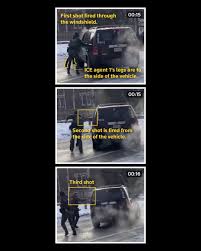
More Context: https://www.reuters.com/world/us/us-federal-agent-involved-minneapolis-shooting-during-immigration-surge-city-2026-01-07/

 Deliberating Truth