Has anything stuck with you lately? Serious, mundane, or superfluous, those moments might be telling you something. Last year I had one of those moments while rewatching HBO’s Band of Brothers.
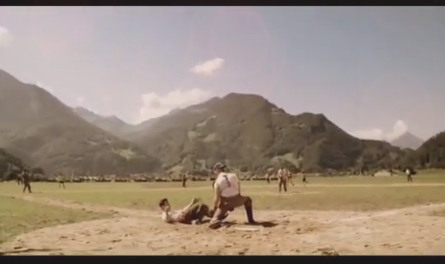
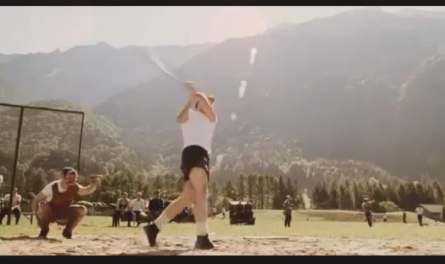
It was mundane as based-on-a-true story films get: the bios before the end credits. All of the actors play baseball while the narrator summarizes their lives after the war. But I felt it in my gut. It was a sad, somber, and confused feeling.
Spoiler Alert!!!!
How did all of these guys just resume their lives in the United States? Sure, there were some big shots like a big business executive and a lawyer/prosecutor. There were also a couple of career Army guys, a writer/journalist/author, and a school administrator. But then there were construction workers, a mailman, a cab driver, a handyman, and two guys whose occupations weren’t even mentioned.
How did these guys go from fighting their way across Europe to working on similar, if not the same, streets, construction sites, and neighborhoods for the rest of their lives? Where is the glory in that?
War is romanticized. Life after war is not.
Band of Brothers is an exceptional series, but it still commits the familiar sins of war cinema: stylized action sequences that make killing look cool, marketing war as an adventure, and glorified martyrdom. It’s true: an athletic style can make war feel cool, soldiering can be exciting, and deaths can be honorable. But as with most fictions, film makers love to exaggerate.
The feeling I felt listening to the bios at the end of Band of Brothers is emblematic of theater – whether it’s your local movie theater or a theater of war halfway across the world. The Band of Brothers film is about war not peacetime. We watch movies for the hook and the climax not the credits. And no one wants to watch a movie about what happens to soldiers after they stop fighting.
I was feeling what the film had conditioned me to feel: sad and somber. But I should have felt these guys. Who wouldn’t prefer a cab, mail route, or construction site to a battlefield!? And why did I feel confused?
I think two things were happening:
(1) I was not valuing the seemingly mundane work that these men completed after the war.
These guys were not doing meaningless work. They were building up the United States, taking care of their families, and fixing what was broken at home. They were still heroes after the war.
(2) I was assuming that the lives of these men could be adequately summarized by a few sentences.
Who wouldn’t be peeved by someone summarizing their life as follows: (1) career, (2) interesting fact, (3) death… that’s not even as long as an obituary. And if you’ve ever tried to write one of those, you know, it’s far too little space to describe a life. The human experience does not easily translate to a single ceremony. Funerals are done by the living for the living, not the dead.
These men were patriots because they served their country before and after the war. The only thing that diminished their post-war experience was our failure to help them capture it, in life or on film.
Many of us do not appreciate life after war. That is our loss. Life after war is what war is all about.
And that failure to appreciate life after war may have something to do with the parrot-like way we are living it. What we have in the United States today are many parrots pretending to be patriots and many patriots masquerading as parrots. What’s the difference between a patriot and a parrot you ask? It’s similar to the difference between preachers, prosecutors, politicians, and other parrot-types versus other, more quiet people. That difference is humility.
Here’s what Adam Grant writes about these [what I call “parrot-like”] behaviors in Think Again (2021):
“As we think and talk, we often slip into the mindsets of three different professions: preachers, prosecutors, and politicians. In each of these modes, we take on a particular identity and use a distinct set of tools. We go into preacher mode when our sacred beliefs are in jeopardy: we deliver sermons to protect and promote our ideals. We enter prosecutor mode when we recognize flaws in other people’s reasoning: we marshal arguments to prove them wrong and win our case. We shift into politician mode when we’re seeking to win over an audience: we campaign and lobby for the approval of our constituents. The risk is that we become so wrapped up in preaching that we’re right, prosecuting others who are wrong, and politicking for support that we don’t bother to rethink our own views.”
These parroting behaviors are our bad habits. They should be rare, but we use them everyday. Parroting means “repeat mechanically”. Does a parrot know what it is saying or is it just repeating it? Don’t worry, I googled it for you:
“Parrots are known for their ability to mimic human speech, but whether they truly understand the meanings of the words they say is a topic of ongoing research and debate. While parrots can learn to associate words with specific objects or contexts, and may even be able to use those associations to communicate, it’s unlikely they understand the complex nuances of human language.
Here’s a more detailed look at the research:
1. Mimicry vs. Understanding:
For example, a parrot might say “Polly want a cracker” not because it understands what a cracker is, but because it associates that phrase with receiving a treat.
Parrots are remarkably talented at mimicking sounds, including human speech.
They can learn to imitate specific words and phrases, even complex ones.
However, their mimicry is often a learned behavior, driven by reward or association with a specific event or object, rather than a true understanding of the word’s meaning.”
(Google “parrot research – do parrots understand what they are saying” 30.May.2025)
Here’s parroting in a nutshell: it starts with consumption and ends with repetition. You or I consume a “breaking news” segment in which one of our favorite “analysts” or “panelists” manically “reacts” to an everyday event being sold as a terrible emergency or unparalleled victory. Then we repeat the talking points and sound bites that left us feeling justified or just angry.
Parroting is not original. It’s not you. It’s someone else’s thoughts entering your head through the eyes-ears superhighway and exiting your body via an untethered tongue. At best, parroting is programming.
Now let’s contrast those parroting behaviors with humility as described by Adam Grant:
“Humility is often misunderstood. It’s not a matter of having low self-confidence. One of the Latin roots of humility means “from the earth.” It’s about being grounded – recognizing that we’re flawed and fallible… What we want to attain is confident humility: having faith in our capability while appreciating that we may not have the right solution or even be addressing the right problem. That gives us enough doubt to reexamine our old knowledge and enough confidence to pursue new insights.”
(Grant, pp. 46-47, 2021)
Humility is authentic kindness and good manners. Humility is active listening. Humility is self-sacrifice.
Humility shuts up the preaching, prosecuting, and politicking. Humility is the confidence to say “I don’t know” and the patience to listen. Humility is courage to wait in silence and live through uncertainty.
“It starts with intellectual humility – knowing what we don’t know. We should all be able to make a long list of areas where we’re ignorant.”
– Adam Grant, pp. 27-28, Think Again (2021)
So, what separates parrots from patriots? Service. Patriots are people of quiet, confident action. They’re not noisy workers. They’re focused on what they know and curious about what they don’t know. And they’re too busy serving to mechanically repeat the latest viral media memes.
People are not all that different from animals. You can learn a lot from their body language. The most most confident and formidable animals are often quiet and relaxed. They don’t waste energy on intimidating movements and noises. They watch you intently to see if you will cross their line. There may or may not be a warning, and their bite is always bigger than their bark.
Don’t mess with a quiet giant. Americans used to understand this. But we are quickly forgetting it.
“Speak softly and carry a big stick.”
– President Theordore Roosevelt (Minnesota State Fair, 1901)
Our patriots are masquerading as parrots. We are giving up our strength. This nation has more than enough territory and resources. We already manifested our destiny via conquest in 1800’s before fighting a tragic Civil War to disallow human slavery and keep our country together.
Why did the United States (U.S.) then radically change itself over the next century? Why did U.S. grant black men (1870) and all women (1920) the right to vote? Why did she fund the $13 billion Marshall Plan for – instead of exorbitantly extracting resources and debt payments from – Western Europe after World War II? Why did the U.S. ally with Japan, South Korea, The Philippines, and Western Germany? Why did she rush to the defense of South Korea thereby entering another costly and catastrophic war? Why did she desegregate her social systems and outlaw racially discriminatory practices in 1965? Why did she lower the voting age to 18 in 1971?
The cynical answer is that the United States committed all of these actions out of her own self-interests. Civil rights and post-war funding were designed to prevent more internal and external conflicts. Alliances were forged and wars were fought to prevent enemies from expanding. This is the natural and understandable “invisible hand” of market economies and “selfish genes” of human nature.
The exceptional answer is this: it was not out of need. The nation either decided it was strong enough to weather the storms of debt and war or, that, it had to be because sharing and suffering with others was the right thing to do. The people of the United States wanted to lead by example, so they did.
The Jim Crowe era, robber barrons, and Roaring Twenties witnessed the age-old sins of racism, greed, and excess, but millions of people in the “Greatest Generation” rose to meet the challenge of tyranny and oppression. Whatever their motivation was, these people were the backbone of a great nation. The USA was an internationally-oriented country, a defender of democratic values, and a juggernaut.
The United States may no longer be the behemoth it once was in this more modern and multi-polar world. But it is still one of, if not the, leading nations. And we the people of the United States still need to choose how we will behave. So, are you a patriot or a parrot? You decide.
Most of the soldiers that returned from World War II left the so-called “glories of war” behind them. Some would fight again in the Korean War. Some found exceptional material success in the post-war economy. Some did not. Some were lost to follow-up. Some reunited with their brothers in arms at reunions. All of them served. And, except for those who did not receive the opportunity complete it, most of that service came after, not during, the war.
The same is true for our soldiers of the more modern wars of Vietnam, Desert Storm, Iraq, and Afghanistan. Those who were not forced to leave their lives on the battlefield continue to serve our nation at home. They are the ones the people of this nation are relying on to lead us to a better place.
Patriots distinguish themselves through quiet, confident service. They do not consume themselves with preaching, prosecuting, or politicking. They do not masquerade as parrots – repeating the programs that have been spoon-fed to them. They are people of calm and gentle action but they don’t take themselves too seriously. They are hard workers and active listeners with a sense humor. They’re smart.
They have made their fair share of mistakes. And they remember them often. They use them as fuel for acts of kindness. Their guilt drives them to do good. They lead by example because they recall the better examples that were left behind. They are reliable because, for better and worse, they know what it means to rely on others. And we continue to rely on them now.
Why morn life after war? Why spend it parroting? Why not just, keep serving? If not for you, for others.
Serve.
If there is a secret sauce to life, that may be it. Serve others. Don’t burn yourself out. Go fishing or do whatever it is you need to do to serve yourself. But, by all means, please, keep serving.




 Deliberating Truth